

Investing in Our Legacy: How to Prepare Our Children for the Best Financial Future


As parents, we all want to leave our children something meaningful — not just money, but the wisdom and confidence to manage it well. True legacy isn’t built through wealth alone; it’s built through knowledge, habits, and preparation.
Yet, for many families, teaching kids about money can feel overwhelming. Schools rarely provide adequate financial education, and many parents worry they’re “not experts” themselves. But the truth is, you don’t need to be a financial professional to prepare your child for success. You just need to start early, stay consistent, and lead by example.
At Level Coaching, we believe every dollar you save, every conversation you have, and every value you teach about money becomes part of your legacy. In this article, we’ll explore how to prepare children and teens for lifelong financial success — from smart savings tools and early investments to building healthy money mindsets and credit habits.
Building a Foundation: Investing for Children at Every Stage
The earlier you start preparing for your child’s financial future, the more power time and compounding interest have to work in your favor. But the right investment strategy depends on your child’s age and your goals.
1. For Babies and Young Children: Laying the Groundwork
When your child is born, the financial world opens up with possibilities — and a few common pitfalls.
Many new parents are familiar with the Gerber Life Grow-Up® Plan, a type of whole life insurance marketed as an investment for children. While it offers some benefits, it’s important to understand what it truly is — and what it isn’t.
- The pros: It guarantees life insurance coverage for your child later in life and builds a small cash value over time.
- The cons: Returns are typically much lower than standard investments, and the “savings” portion grows slowly compared to other options.
If your goal is to build wealth, not just secure insurance, consider alternatives such as:
- 529 College Savings Plans: Tax-advantaged accounts for education expenses. Funds grow tax-free and can now be rolled into a Roth IRA (with limitations) if not used for school.
- Custodial Brokerage Accounts (UTMA/UGMA): Let you invest in stocks, ETFs, or index funds in your child’s name. These accounts grow with the market and can be used for any purpose once your child reaches legal age.
- High-Yield Savings Accounts for Kids: A safe, flexible place to store gift money or early savings while teaching kids about interest and growth.
Starting small — even $25 or $50 per month — creates a foundation your child can build on for decades.
2. For Preteens and Teens: Learning Responsibility
As kids grow older, their relationship with money shifts from curiosity to independence. This is the ideal time to introduce budgeting tools, savings goals, and basic banking.
Start-Up Checking and Savings Accounts
Many banks and credit unions now offer linked teen checking and savings accounts designed to teach financial responsibility. Parents remain joint owners, allowing oversight while kids manage their own spending. Look for accounts with:
- No monthly maintenance fees
- Mobile app access for tracking balances
- Automatic savings transfers
- Parental controls or spending alerts
Some popular options include Capital One Money Teen Checking, Chase First Banking, and Greenlight, which gamify saving and spending goals.
Budgeting Tools for Teens and Young Adults
Budgeting doesn’t have to be boring. Help teens use user-friendly tools like:
- YNAB (You Need A Budget) – Teaches proactive budgeting with real-time tracking.
- Mint – Helps visualize spending and saving trends.
- GoHenry – A prepaid debit card and app for kids that teaches budgeting through allowance and goals.
Encouraging your teen to categorize spending (“needs,” “wants,” and “savings goals”) builds financial awareness that will last into adulthood.
Introducing Secure Credit Cards
Building credit early — and responsibly — sets young adults apart. Once your child turns 18, a secured credit card can be a safe entry point. These cards require a refundable deposit that becomes the credit limit, allowing them to establish a score without risk of overspending.
Recommended options include:
- Discover It® Secured Credit Card – Offers cash back and credit monitoring tools.
- Capital One Platinum Secured – Reports to all three major credit bureaus.
Encourage them to use the card for one or two recurring bills (like a phone payment), pay it off monthly, and track their credit score progress.
Talking About Money with Kids and Teens
One of the greatest gifts you can give your child isn’t financial support — it’s financial confidence. Unfortunately, most schools provide little to no education about credit scores, loans, or investing. That’s where parents come in.
1. Start the Conversation Early
Even young children can understand simple money concepts. Use age-appropriate lessons:
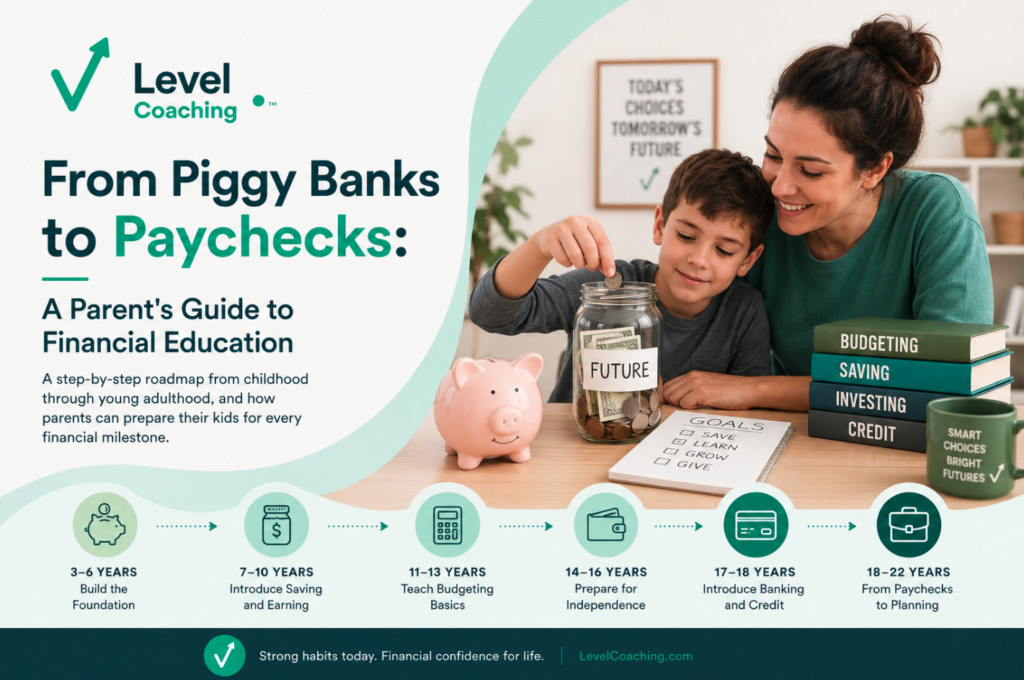
- Ages 3–6: Introduce coins, savings jars, and the concept of earning through chores.
- Ages 7–12: Discuss spending choices, needs vs. wants, and saving for goals.
- Ages 13–18: Talk openly about bank accounts, credit, interest, and debt.
The goal isn’t perfection — it’s comfort. You want your children to feel confident talking about money, not afraid of it.
2. Normalize Financial Conversations
Money should never be a taboo topic in your home. Discuss your financial decisions, like budgeting for a vacation or saving for a family goal. Share mistakes you’ve made and what you learned from them.
Children model what they see. If they see you track expenses, save regularly, and talk openly about money, they’ll grow up viewing those actions as normal, healthy behaviors.
3. Teach Credit Scores Early
Many young adults enter college or the workforce without understanding how credit scores impact their future — from renting an apartment to buying a car. Teach your teens that a credit score is essentially a “trust score” that lenders use to measure reliability.
Explain the basics:
- Payment history: Pay on time, every time.
- Credit utilization: Keep balances under 30% of limits.
- Credit mix: A variety of accounts (loans, cards) helps long-term.
- Length of credit history: The earlier they start responsibly, the better.
Show them their own credit report once they’ve opened their first account — reviewing it together demystifies the process.
Building a Lasting Legacy
When we talk about “investing in our legacy,” it’s about more than leaving money behind. It’s about leaving the tools, habits, and mindset that help our children create wealth for themselves.
Here are key takeaways for parents and guardians looking to make a lasting impact:
- Start Early: Even small, consistent investments compound into significant results over time.
- Empower, Don’t Enable: Teach kids to manage money — not just receive it.
- Talk Openly: Make money a normal, shame-free topic in your household.
- Lead by Example: Your habits will shape theirs more than any lecture ever could.
- Teach Resilience: Financial literacy is protection. When your children understand how money works, they’re equipped to recover from setbacks and seize opportunities.
A strong financial legacy is one that lives beyond you — one that empowers your children to stand on their own feet, make informed choices, and create security for generations to come.
The Level Coaching Perspective
At Level Coaching, we see financial education as a form of love. Teaching your kids about money, budgeting, and credit isn’t just preparing them for adulthood — it’s protecting them from financial stress, poor decisions, and dependency.
Our Financial Success Coaches often work with families who want to break cycles of fear, avoidance, or misinformation. We help parents create step-by-step plans to introduce healthy money habits at every age — from a toddler’s first savings jar to a teen’s first paycheck.
When you invest in your children’s financial literacy, you’re investing in your legacy.
Written by Nichole Olds,
October 2025




Responses