

Small Payments, Big Spending: The Illusion of Affordability

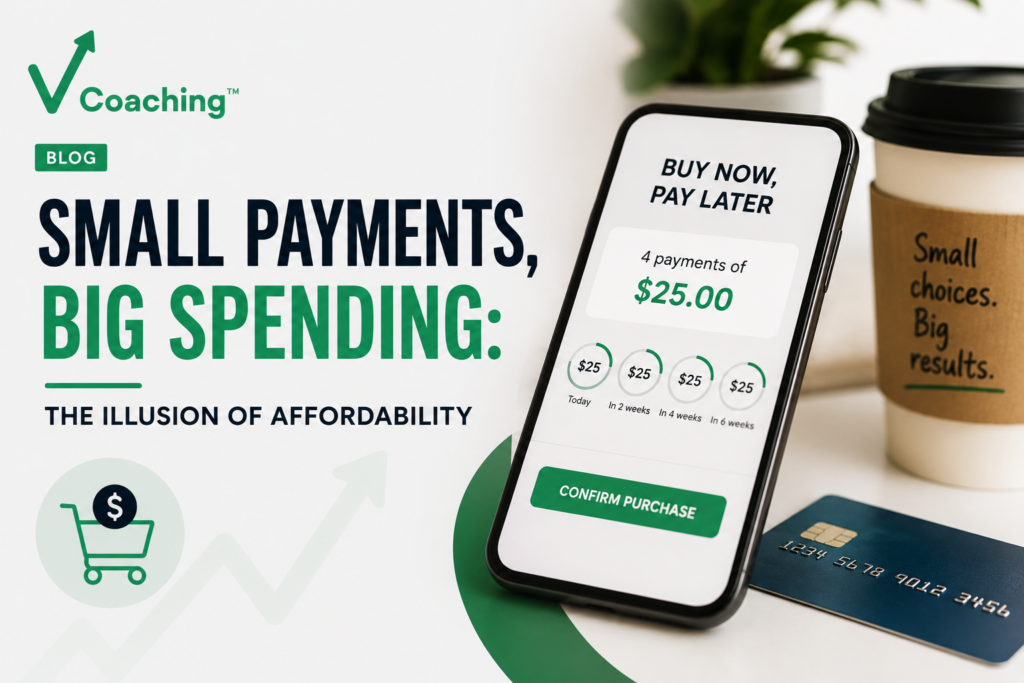
“Only four payments of $25.”
Buy Now, Pay Later programs have exploded in popularity because they make purchases feel smaller, easier, and more manageable. Instead of paying the full price upfront, shoppers can split purchases into smaller installments spread across several weeks or months.
At first glance, this can feel harmless—even helpful.
But there’s an important financial reality many consumers overlook: small payments can create the illusion of affordability.
And when multiple installment plans stack together, financial stress can build much faster than expected.
Understanding Buy Now, Pay Later
Buy Now, Pay Later (BNPL) services allow consumers to split purchases into installment payments, often with little or no interest if payments are made on time.
Popular providers include:
- Klarna
- Afterpay
- Affirm
- Zip
- PayPal Pay Later
These services are now integrated into everything from clothing websites to travel bookings and electronics purchases.
The convenience is part of the appeal. Instead of asking, “Can I afford this entire purchase?” consumers often begin asking, “Can I afford this payment?”
That shift in thinking matters.
The Psychology Behind BNPL
Buy Now, Pay Later changes how our brains process spending.
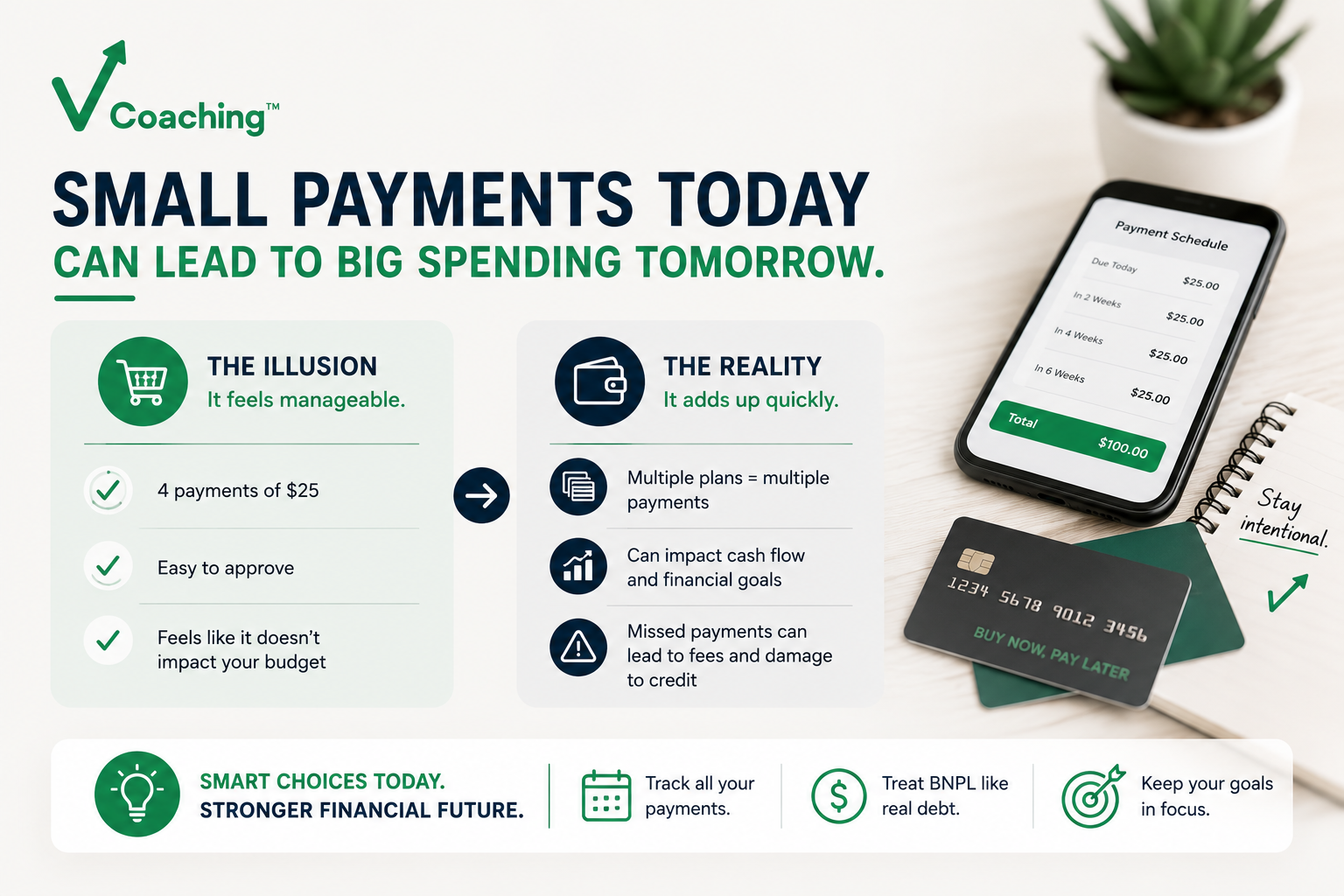
A $200 purchase may feel expensive upfront. But four payments of $50 often feel manageable—even if the total cost is exactly the same.
This psychological separation from the full price can encourage overspending.
Consumers may begin purchasing:
- More items than originally planned
- More expensive versions of products
- Multiple purchases simultaneously
Individually, the payments may seem small.
Collectively, they can become overwhelming.
Why BNPL Can Become Dangerous
The biggest risk with Buy Now, Pay Later is not usually one purchase—it’s accumulation.
Someone may have:
- A clothing payment due next week
- Furniture payments due later this month
- Electronics payments scheduled next month
Suddenly, several “small” payments create a large monthly obligation.
Because BNPL plans often feel disconnected from traditional debt, many people underestimate how much they truly owe.
But installment payments are still debt.
And debt impacts cash flow whether it appears on a credit card statement or not.
Treat BNPL as Real Debt
One of the healthiest financial habits is treating Buy Now, Pay Later exactly like any other debt obligation.
Before using BNPL, ask:
- Would I still buy this if I had to pay the full amount today?
- Will these payments impact next month’s budget?
- Do I already have active installment plans?
If the answer creates hesitation, it may be worth pausing before committing.
Convenience should never replace financial clarity.
Understanding the Lack of Consumer Protection
Another important factor many consumers don’t realize is that Buy Now, Pay Later services often operate differently than traditional credit cards.
Some BNPL services may offer:
- Limited dispute protections
- Fewer fraud protections
- Less flexibility during financial hardship
Additionally, many installment plans may not appear on your credit report unless you default or miss payments.
That can create a false sense of security.
Just because it isn’t immediately impacting your credit doesn’t mean it isn’t affecting your financial health.
Missed payments can still lead to:
- Fees
- Collection activity
- Credit reporting after default
Responsible Approaches to BNPL
Buy Now, Pay Later is not automatically bad. Used carefully, it can occasionally help manage cash flow for planned purchases.
But responsible boundaries matter.
Limit Active Plans
Avoid stacking multiple installment plans simultaneously.
The more active plans you carry, the harder it becomes to track future obligations.
Track Payments Carefully
BNPL payments can easily get forgotten because they are often spread across different apps and accounts.
Adding payment dates to your calendar or budgeting app helps prevent missed payments.
Use It for Planned Purchases, Not Impulse Spending
Using installment plans for impulsive shopping is one of the fastest ways to create financial strain.
If a purchase wasn’t already part of your financial plan, splitting it into smaller payments does not make it more affordable.
Prioritize Needs Over Convenience
BNPL should never become a substitute for emergency savings or proper budgeting.
If basic expenses are already difficult to manage, adding installment debt usually increases financial pressure rather than relieving it.
The Bigger Financial Picture
One of the biggest dangers of Buy Now, Pay Later is how normal it has become.
Installment options are now built directly into checkout pages because retailers know consumers are more likely to spend when payments feel smaller.
But affordability is not determined by monthly payment size alone.
True affordability means:
- The purchase fits comfortably into your budget
- It does not create future financial strain
- It aligns with your financial priorities
Small payments can still create big financial problems when they accumulate without intention.
Final Thoughts
Buy Now, Pay Later services can make spending feel easier, but easier spending is not always healthier spending.
The key is awareness.
By treating BNPL as real debt, limiting active installment plans, and making intentional purchasing decisions, you can avoid the illusion of affordability that traps many consumers into overspending.
A smaller payment does not always mean a smarter financial decision.
Sometimes the best financial choice is slowing down long enough to ask whether the purchase truly fits your goals and your budget.
Written by Nichole Olds,
May 2026



Responses