

Money and Mental Wellness: Breaking the Stress Cycle

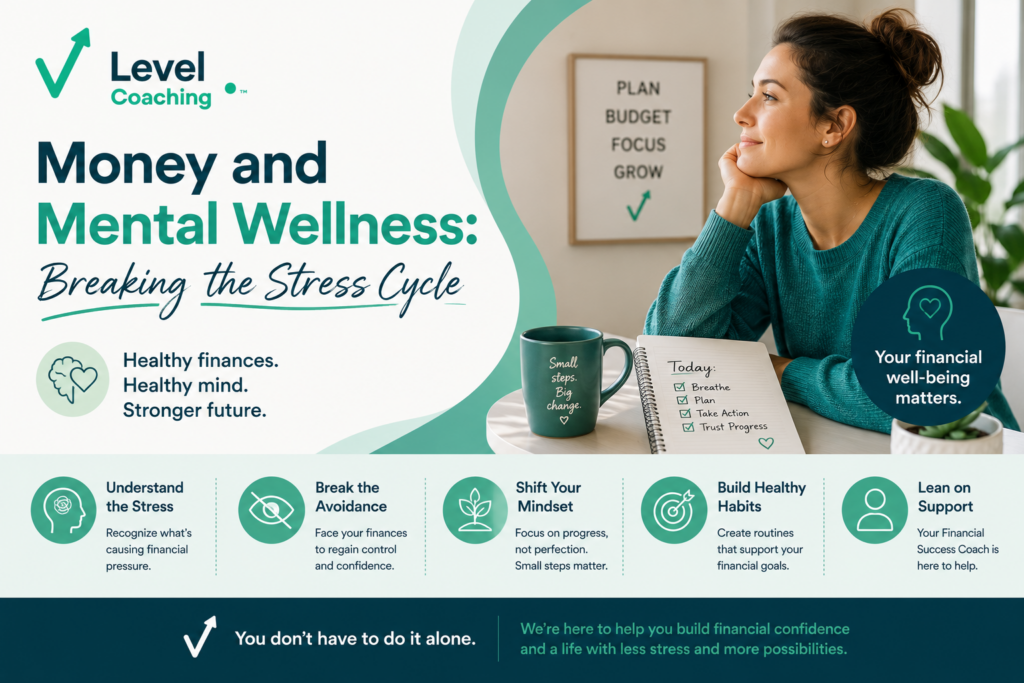
Money touches nearly every part of our lives. It affects where we live, the opportunities we pursue, the experiences we have, and even how we feel when we wake up each morning. It’s no surprise that finances are consistently ranked as one of the leading sources of stress for adults.
While financial challenges can certainly create stress, it’s often our relationship with money—not just the numbers in our bank account—that determines how much that stress affects our daily lives. Financial anxiety can lead to avoidance, impulsive decisions, and a cycle that feels impossible to break.
The good news is that financial stress doesn’t have to control your life. By recognizing unhealthy patterns, shifting your mindset, and seeking support when needed, you can build both financial confidence and greater peace of mind.
Understanding Financial Stress
Financial stress isn’t limited to people struggling to make ends meet. It can affect anyone, regardless of income.
Common sources of financial stress include:
- Credit card debt
- Student loans
- Medical expenses
- Living paycheck to paycheck
- Unexpected emergencies
- Job loss or career uncertainty
- Rising housing or grocery costs
- Saving for retirement
- Supporting family members
Even positive life events—buying a home, getting married, or having children—can create financial pressure.
When money becomes a constant source of worry, it can impact much more than your bank account.
How Financial Stress Impacts Everyday Life
Financial stress rarely stays contained to your finances. It often spills into other areas of life.
You may notice:
- Trouble sleeping
- Increased anxiety
- Difficulty concentrating
- Irritability with loved ones
- Lower productivity at work
- Feeling overwhelmed by simple decisions
- Avoiding conversations about money
Over time, constant financial stress can affect both your physical and emotional well-being.
The first step toward breaking the cycle is recognizing that your financial health and your mental wellness are closely connected.
Financial Avoidance: A Common Coping Mechanism
When money feels overwhelming, many people instinctively avoid it.
While avoidance may provide temporary relief, it usually makes financial challenges feel even larger over time.
Some common financial avoidance behaviors include:
Avoiding Bank Statements
Have you ever ignored your banking app because you didn’t want to see the balance?
This is incredibly common.
Unfortunately, avoiding the numbers doesn’t make them disappear. In many cases, it increases anxiety because uncertainty often feels worse than reality.
Ignoring Bills
Setting unopened bills aside may reduce stress for a moment, but missed payments can lead to late fees, damaged credit, and additional financial pressure.
Using Shopping to Feel Better
Retail therapy can create a temporary emotional boost.
Buying something new often provides a quick burst of excitement or comfort, especially after a stressful day.
The problem is that the feeling usually fades quickly, while the financial consequences remain.
Recognizing emotional spending is an important step toward creating healthier coping strategies.
Delaying Financial Decisions
Whether it’s creating a budget, increasing retirement contributions, or asking for help with debt, procrastination often stems from fear rather than laziness.
The longer difficult decisions are postponed, the more overwhelming they can become.
Shifting from Negative Thinking to Positive Action
Many people develop negative beliefs about money over time.
You might catch yourself thinking:
- “I’ll never get out of debt.”
- “I’m terrible with money.”
- “It’s too late to fix this.”
- “I always mess things up.”
These thoughts feel true in the moment, but they aren’t facts.
Instead of focusing on everything that’s wrong, shift your attention toward what you can control today.
Try replacing those thoughts with:
- “I’m learning healthier financial habits.”
- “Every payment moves me closer to my goal.”
- “Progress matters more than perfection.”
- “I can make one good financial decision today.”
Changing your mindset doesn’t erase financial challenges, but it changes how you respond to them.
Focus on Progress, Not Perfection
Many people abandon financial goals after making one mistake.
They overspend one weekend.
They miss a savings goal.
An unexpected expense wipes out part of their emergency fund.
Instead of viewing these moments as failures, see them as part of the process.
Financial success isn’t about being perfect every month.
It’s about consistently making more good decisions than bad ones.
Progress compounds over time.
Build Healthy Financial Habits
Small habits often have a bigger impact than dramatic changes.
Start with simple routines like:
- Checking your bank account a few times each week.
- Reviewing your budget every payday.
- Scheduling automatic savings transfers.
- Paying bills on time.
- Tracking spending without judgment.
These habits create awareness, and awareness creates confidence.
The more familiar you become with your finances, the less intimidating they feel.
Don’t Be Afraid to Adjust the Plan
Life changes.
Income changes.
Expenses change.
Your financial plan should change too.
Many people think adjusting a budget means they’ve failed.
In reality, flexibility is one of the most important parts of long-term financial success.
A good financial plan should support your life—not make you feel trapped by it.
You Don’t Have to Do It Alone
One of the biggest mistakes people make is believing they have to solve every financial problem by themselves.
Seeking support isn’t a sign of weakness.
It’s a smart financial decision.
Working with a Financial Success Coach gives you someone who can:
- Help create a realistic financial plan.
- Identify spending patterns that may be holding you back.
- Keep you accountable to your goals.
- Celebrate your progress along the way.
- Adjust your plan when life changes.
- Provide encouragement during difficult seasons.
Sometimes simply having someone to talk through your financial concerns with can reduce stress and help you see solutions that weren’t obvious before.
Financial coaching isn’t about judgment.
It’s about partnership.
Small Steps Create Big Change
Breaking the cycle of financial stress doesn’t happen overnight.
It happens one decision at a time.
One budget review.
One debt payment.
One savings deposit.
One honest conversation.
Every small step builds confidence and helps replace fear with control.
Final Thoughts
Money will always be part of life, but it doesn’t have to be the source of constant anxiety. By recognizing financial avoidance behaviors, challenging negative thought patterns, and replacing them with healthy habits, you can create a stronger relationship with both your finances and your mental well-being.
At Level Coaching, we understand that financial wellness is about more than numbers—it’s about confidence, resilience, and having a plan that works for your unique situation. Whether you’re paying off debt, rebuilding your budget, or simply looking for accountability, our Financial Success Coaches are here to help you stay focused, adjust when life changes, and continue moving toward your goals with confidence.
Written by Nichole Olds,
July 2026





Responses